

• Home
  • Reviews
  • Featured
  • Archives
  • Videos
  • Devices
  • Send Tips
  • Contact
  • AndroidCommunity on Twitter AndroidCommunity on Facebook AndroidCommunity on Google+ AndroidCommunity RSS Feed

Android Community

    • MUST READ

      STORIES

    • Android 5.0 ‘Key Lime Pie’ Concept Design has us dreaming for the future

      June 18, 2013

    • Huawei Ascend P6 official as world’s thinnest smartphone

      June 18, 2013

    • Kazam created by ex-HTC execs, aimed for European market

      June 17, 2013

  • Trending Topics
  • Jelly Bean
  • NVIDIA
  • Galaxy S 4
  • HTC One
  • Nexus 7
  • Tegra
  • Sell Your Used Phone

Texas Instruments Announces 1.8 GHz Dual Core Chip

0
  • By John Scheible
  • on 3 Jun, 2011

Texas Instruments Announces 1.8 GHz Dual Core Chip

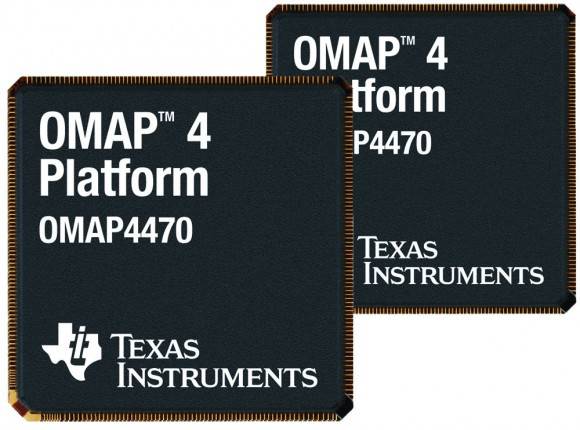
Texas Instruments silicon has been a bit scarce in top tier Android devices in 2011. In fact almost all of the uber-phones of 2011 so far are running on either Qualcomm Snapdragons or Nvidia’s Tegra 2. TI is looking to change that with the announcement of their latest OMAP ARM processor, the OMAP 4470. The dual core processor is said to launch in the first half of 2012.

While we can’t be sure why TI’s chips seem to have fallen out of the good graces of Android OEMs of late, this chip seems to be poised at offering some major incentives. While 2012 is a little late to peg this processor as the chip to land in the first Ice Cream Sandwich phone this winter, it could make a big splash when it does thanks to its top tier specs and a couple tricks as well.

The chip will be clocked at a blazing 1.8 GHz, almost twice as fast as the Tegra 2. But what about Nvidia’s Kal-el processor and its FOUR cores? Well if the new OMAP won’t be making it to devices until 2012, you can be sure it will be competing with with Nvidia’s quad-core device, said to be available at the end of this year. The OMAP4470 has a trick up it’s sleeve though. In addition to its two ARM A9 cores, it will have two smaller ARM M3 cores to ease the load on the two main cores during resource intensive tasks like rendering 3D graphics. TI claims that these smaller cores will draw less power, optimizing battery life, while still providing some extra “oomph” for the times when you’ll need 4 cores.

We still have some time until 2012 and Qualcomm and Nvidia certainly aren’t resting on their laurels while TI develops their latest chip. With mobile SoCs continuing to get faster and more energy efficient at an incredible rate, its only a matter of time before I’ll be able to make a certain Dragon Ball Z reference about my Quadrant score…

[via SlashGear]

Share
  • Google Now wallpapers in full-size available now for all
  • BlackBerry Messenger for Android coming June 27
  • iOS 7 has popular Apple hacker eying switch to Android

Tags: dual-coreGoogleOMAP4470Texas Instruments

  • Search

  • REVIEWS

    • Sony Xperia ZL ReviewSony Xperia ZL Review
    • GALAXY S 4 Tech21 Impact Mesh case reviewGALAXY S 4 Tech21 Impact Mesh case review
    • AT&T LG Optimus G Pro ReviewAT&T LG Optimus G Pro Review
    • Iron Man 3 game Review: what you need to knowIron Man 3 game Review: what you need to know
    • Samsung GALAXY S 4 ReviewSamsung GALAXY S 4 Review
  • HANDS-ON & QUICK LOOKS

    • Huawei Ascend P6 “Beauty Shot” hands-on demo shows smooth-skin oddityHuawei Ascend P6 “Beauty Shot” hands-on demo shows smooth-skin oddity
    • Huawei Ascend P6 hands-onHuawei Ascend P6 hands-on
    • Nyko Dock for NVIDIA SHIELD hands-onNyko Dock for NVIDIA SHIELD hands-on


  • T-Mobile G1 Accessories
  • RECENT COMMENTS

  • About
  • Contact
  • Terms of Use
  • Privacy Policy
  • Advertise

Copyright 2013 Android Community