
• Home
  • Reviews
  • Featured
  • Archives
  • Videos
  • Devices
  • Send Tips
  • Contact
  • AndroidCommunity on Twitter AndroidCommunity on Facebook AndroidCommunity on Google+ AndroidCommunity RSS Feed

Android Community

    • MUST READ

      STORIES

    • Android 4.3 leaks on video with new camera UI

      May 24, 2013

    • HTC One ‘Senseless Edition’ could arrive this summer

      May 23, 2013

    • Verizon HTC One reality returns as DROID DNA offer pops up

      May 20, 2013

  • Trending Topics
  • Jelly Bean
  • NVIDIA
  • Galaxy S 4
  • HTC One
  • Nexus 7
  • Tegra
  • Sell Your Used Phone

Hardkernel unleashes ODROID dev boards for a budget price

2
  • By Eric Abent
  • on 30 Nov, 2012

Hardkernel unleashes ODROID dev boards for a budget price

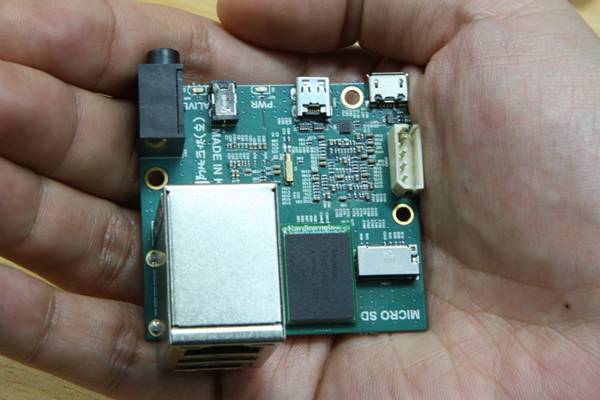
Let’s say you’re looking to pick up a new dev board, but you’re a little short on cash. Hardkernel doesn’t think that’s a problem, today introducing the world to its new, teeny-tiny ODROID-U and ODROID-U2 developer boards. As you can see below, the boards can fit in the palm of your hand, and they start at just $69, which isn’t bad at all.


With that price, you might think that you’re getting bottom of the barrel hardware, but the new boards actually come with nice equipment attached. For example, the ODROID-U comes with a quad-core Samsung Exynos 4412 processor clocked at 1.4GHz, 1GB of RAM, quad-core Mali 400 graphics at 400MHz, a pair of USB ports, a micro HDMI port, 10/100 Ethernet, and a headphone jack. That certainly isn’t bad for $69.

If you’re willing to plop down a little more cash, you can take home the ODROID-U2 for $89. This one features mostly the same equipment, with Hardkernel swapping out the processor in favor of a quad-core 1.7GHz Samsung Exynos 4412 Prime. You’ll also be getting 2GB of RAM instead of just 1GB, so there are some significant upgrades with the ODROID-U2 despite the fact that you’re only paying $20 more.

Obviously, given the size of these board, there isn’t any storage included, so Hardkernel suggests that you pick up a microSD card or an eMMC module to add some flash storage. It’s also worth pointing out that the processors found in the ODROID-U and the ODROID-U2 are the same CPUs that are used by the Samsung Galaxy S III and the Galaxy Note II, respectively. Hardkernel says both are capable of running Android and “various Linux operating systems,” and they’re available to purchase from the company’s store. Are you thinking of picking one up?

Story Timeline

  • ODROID handheld gaming device runs Android
  • Sold out: Android Powered ODROID Gaming Handheld Dev Edition
  • The Android Handheld ODROID, Launches Worldwide Developer Edition [Video]
  • ODROID Gets Android 2.1
[via Mobile Geeks]
Share
  • New Nexus 7 reportedly shipping now, launching next month
  • HTC One with a larger 5-inch display coming soon
  • Android 4.3 leaks on video with new camera UI

Tags: AndroidcomputerExynoslinuxODROIDSamsung

  • Kirk Spencer

    I am definitely going to have to check this dev board out. It could be just what the doctor ordered. I’ve considered picking up a miniand hackberry, but this is way better hardware in terms of processing power and I like the small size too.

  • http://ootpapps.com/ Out of the Park Apps

    Super. Cool.

  • Search

  • REVIEWS

    • AT&T LG Optimus G Pro ReviewAT&T LG Optimus G Pro Review
    • Iron Man 3 game Review: what you need to knowIron Man 3 game Review: what you need to know
    • Samsung GALAXY S 4 ReviewSamsung GALAXY S 4 Review
    • Samsung Galaxy Note 8.0 ReviewSamsung Galaxy Note 8.0 Review
    • Pebble review: Two weeks with a smartwatchPebble review: Two weeks with a smartwatch
  • HANDS-ON & QUICK LOOKS

    • Coolpad Quattro II 4G and 8920 hands-onCoolpad Quattro II 4G and 8920 hands-on
    • Kyocera Hydro XTRM and EDGE hands-onKyocera Hydro XTRM and EDGE hands-on
    • Opera for Android exits beta, we go hands onOpera for Android exits beta, we go hands on


  • T-Mobile G1 Accessories
  • RECENT COMMENTS

  • About
  • Contact
  • Terms of Use
  • Privacy Policy
  • Advertise

Copyright 2013 Android Community