

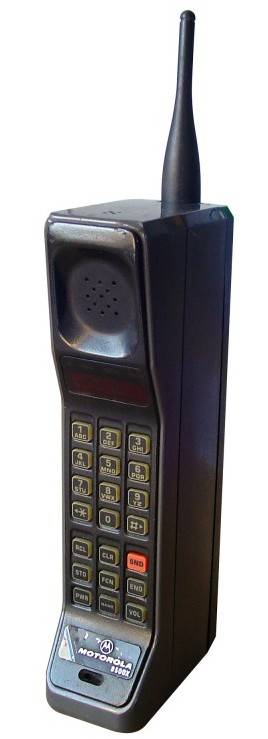
In the great IP wars of the early 21st century, patents are bought and sold like AK-47s on the black market. And to extend the metaphor, Google just picked up a payload that might prove to be very effective indeed. The company has acquired 188 patents outright with another 29 patents pending being transferred to Google. The most interesting among them is a patent on the “computer phone”, issued way back in 1987.
Since wireless phones were in their infancy at the time and computers of the day were, without exaggeration, less powerful than some watches, the terms of the patent are naturally vague. It basically defines a small, low-powered computer that’s integrated into a short-range wireless handset, allowing for basic tasks to be performed with the dialer. There isn’t even any mention of the Internet in the filing, though a wireless network (presumably a LAN of some kind) is detailed. You can read the full filing for patent 7,499,726 at the US Patent Office.
The transferred IP includes a smattering of dozens of fields that IBM has been part of in the last few decades, including servers, video conferencing, instant messaging and more. This is almost certainly an attempt to fill out Google’s already considerable patent portfolio, which is widely considered to be the same reason that the company bought Motorola Mobility in 2011.
How will this affect Android? It’s tough to say at this juncture. The “computer phone” patent is unlikely to be as far-reaching as its title would imply, since IBM hasn’t been collecting royalties for the last 25 years. Just about any cell phone could fall under that definition. But it could serve as one of many deterrents to the likes of Oracle, Apple and Microsoft, though only Oracle has sued Google directly thus far.
[via SlashGear]








You go Google. Personally I would go after Apple first then MS since apple is the most harsh towards android OEMS
Hopefully these will act as a deterrent. However, I don’t want Google to turn into Microsoft or Apple and start suing if/when they have enough patents to do so freely. Keep to your word and further innovation, don’t hinder it.